Showing posts with label Art. Show all posts

Wednesday, February 28, 2018

Art Week II

Well, so much for my good intentions. I must apologize again for the long delay in writing, especially after promising more in the coming days after my last post. Although, perhaps you should thank me. I am giving whomever cares a God-like experience; how often do we apologize for our sinfulness and promise God that we will do better, only to fall again and again? I will ask you all to be Christ to me and forgive me each time I fail to deliver; perhaps one of these times I will deliver.

With that aside, I would like to talk about Art Week II. The focus of these four days was on the Renaissance and Baroque styles. The art of these periods is incredible. The details and realism achieved by the sculptors and painters is unbelievable, and the architects built some absolute marvels.

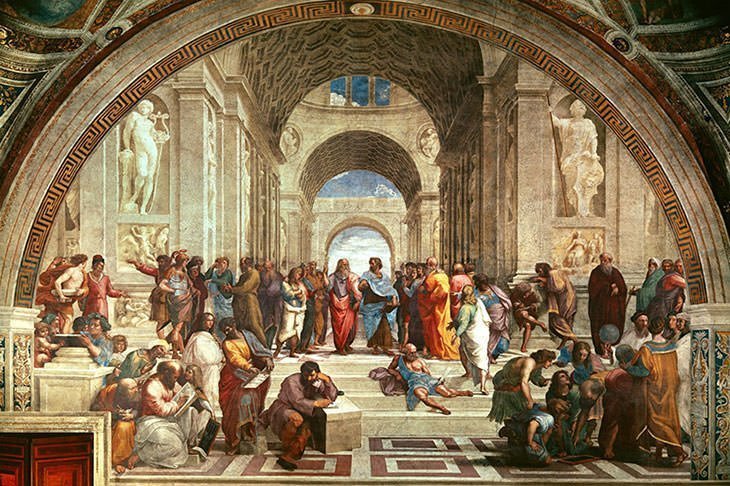
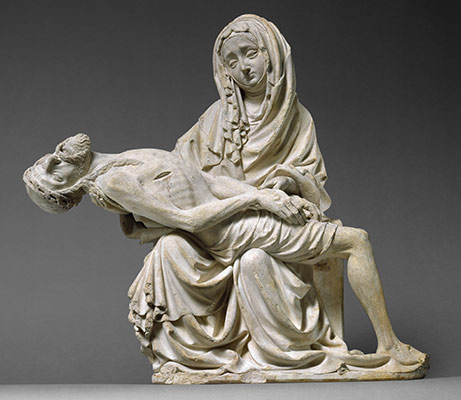
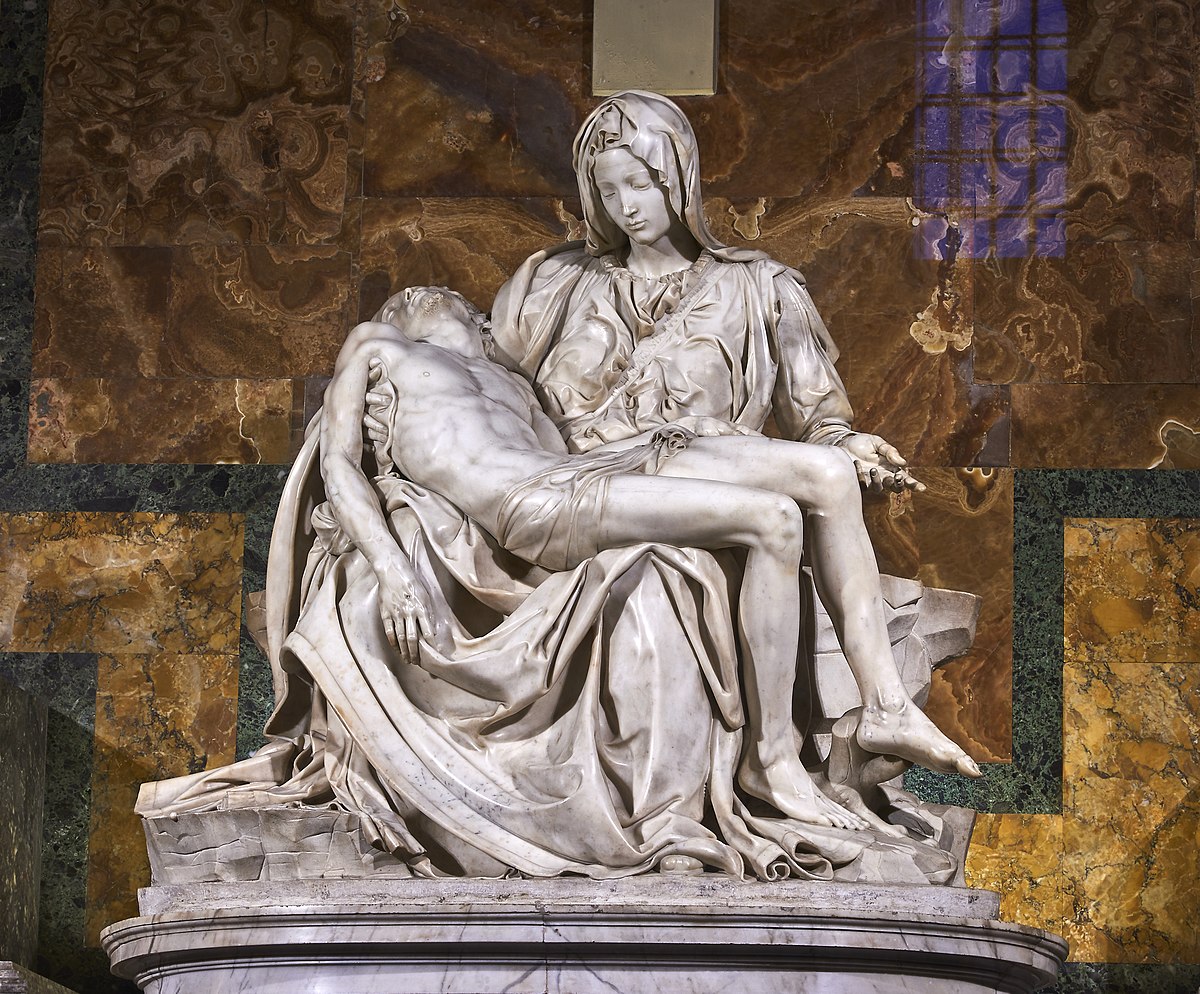
The interesting thing to me about the art of these periods is the transition from flat, unrealistic art in the Middle Ages (still beautiful and masterful in its own way) to the highly detailed and realistic art in the Renaissance and Baroque periods. Here is an example of the transition, first in paintings, then in sculpture:
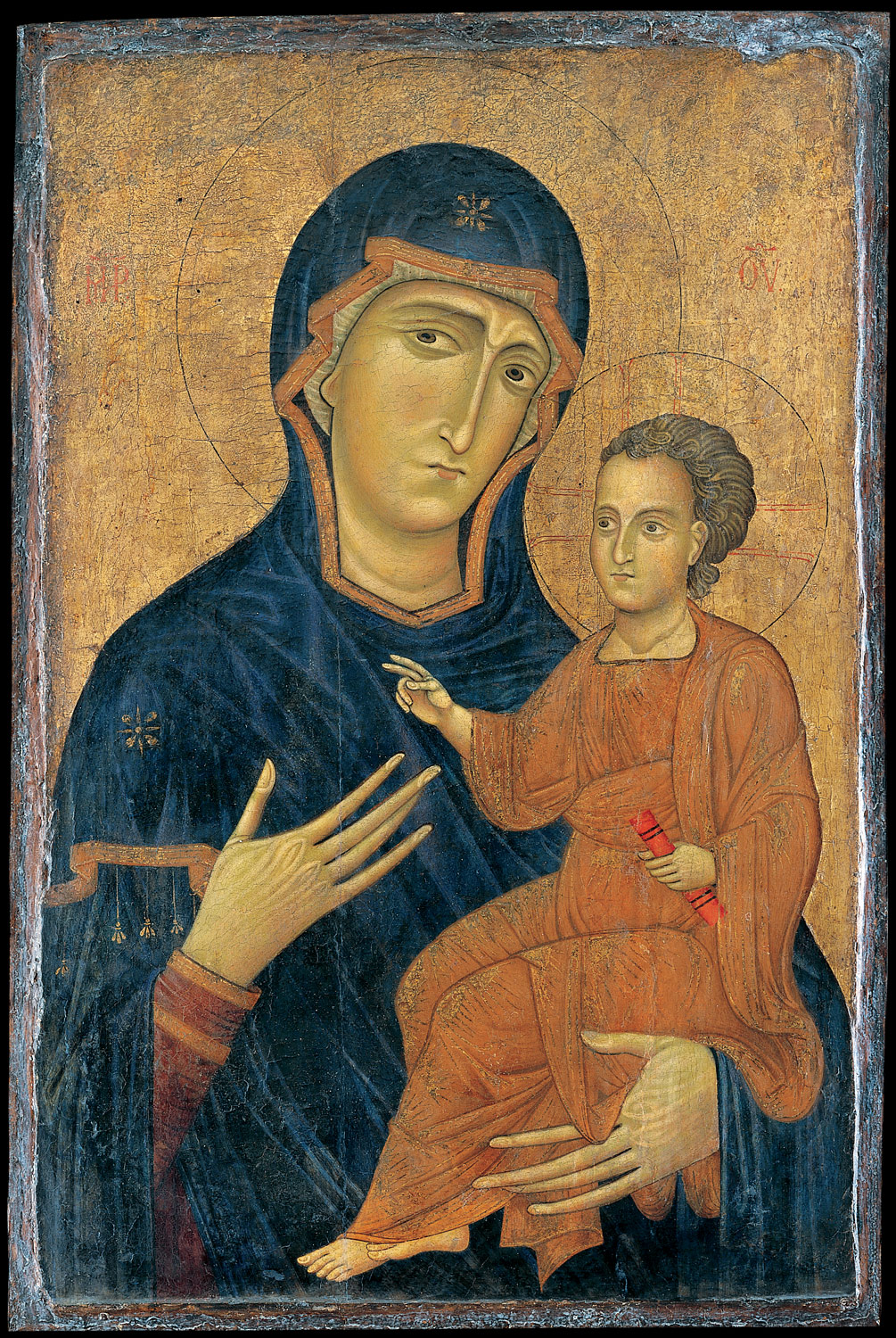
Risultati immagini per medieval painting
Madonna and Child, Berlinghiero, 13th century

Kiss of Judas, Giotto, 14th century
Risultati immagini per giotto paintings
Risultati immagini per fra angelico paintings
Painting by Fra Angelico, 15th century
Risultati immagini per paintings by raphael
The School of Athens, Raphael, 16th century
Risultati immagini per medieval sculpture
Medieval Pieta
Risultati immagini per pieta
Pieta, Michelangelo, Renaissance
Risultati immagini per bernini sculpture
The Ecstasy of St. Teresa, Bernini, Baroque Period
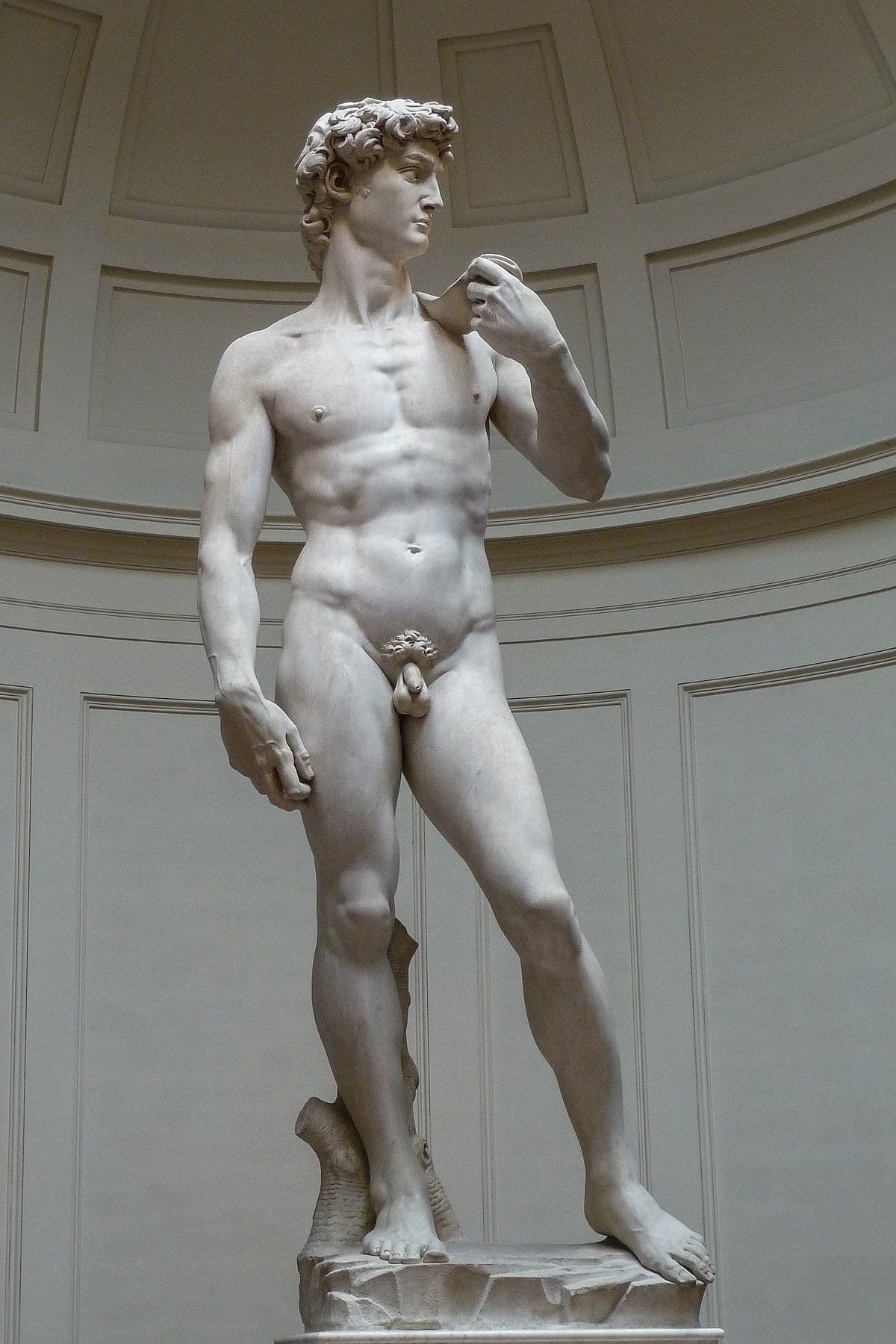
Michelangelo is another incredibly interesting part of this period. He was incredibly talented, complicated, and worked in a huge diversity of fields. While most sculptors made small models of their sculptures, working up in size before going to the final product in marble, Michelangelo would take the block and start working right away, producing masterpieces without a model to work from. David, Pieta, and Moses are just some of his famous sculptures. Michelangelo painted the famous ceiling of the Sistine Chapel, but he did not want to do it. He had originally come to Rome to build the epic tomb of Pope Julius II, but was switched to the Sistine Chapel when the Pope decided against building the tomb. Michelangelo did not want to paint, so he went home to Florence, but the Pope convinced him to return and work. Michelangelo had a large group of help at first (it was a huge task), but he ended up kicking everyone else out and locking himself up in the Chapel to work. Incredibly, he painted the entire ceiling, by himself, in four years. That means he came up with the design, drew it out, put up scaffolding for one section of painting, prepared the ceiling, painted the ceiling, and moved the scaffolding to another part of the Chapel. It was only at that point that he was able to see what his work looked like in full. The paintings were done by candlelight (there were no windows above his scaffolding) and much of it was done with him lying on his back. All of this in four years. He would later paint one wall of the Sistine Chapel with the famous Last Judgement. To top it all off, Michelangelo was one of the last architects for St. Peter's Basilica. This job he took as an old man. He did it for free on the condition that nobody would tell him what to do. Overall, he was an impressive, fascinating, and confusing man, and incredibly interesting to learn about.

The visits were mostly to museums, churches, and villas where there are collections of art (the buildings themselves often being a work of art). I will close with a list a few of my favorite churches, as well as some of my favorite artists in case anyone is interested in getting a taste of what I saw.

Churches:
St. Peter's Basilica (Renaissance/Baroque)
The Gesu (Baroque)
The Church of Saint Ignatius of Loyola (Baroque)

Painters:
Fra Angelico (Early Renaissance painter and Beatified Dominican Friar)
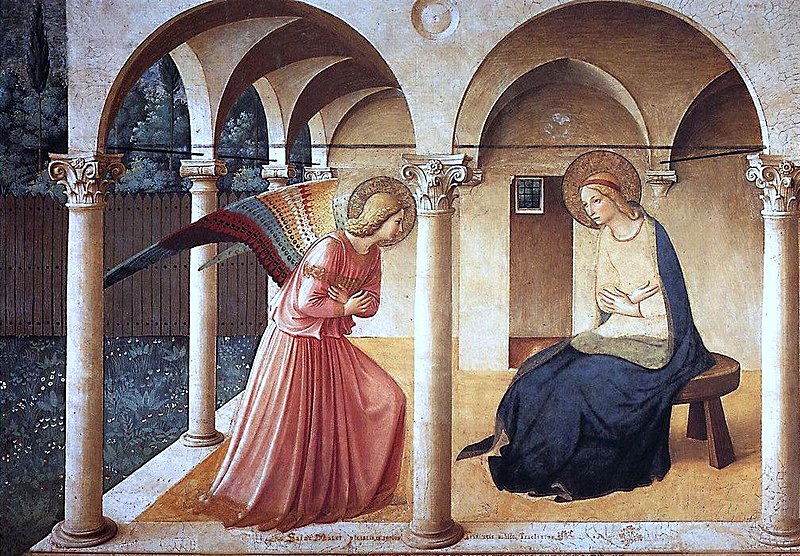
The Virgin of the Annunciation
Raphael (High Renaissance painter and Ninja Turtle. I especially like his works in the Vatican Museums)

Risultati immagini per the disputation of the holy sacrament
The Disputation of the Holy Sacrament
Risultati immagini per raphael madonna and child
Madonna of the Meadow
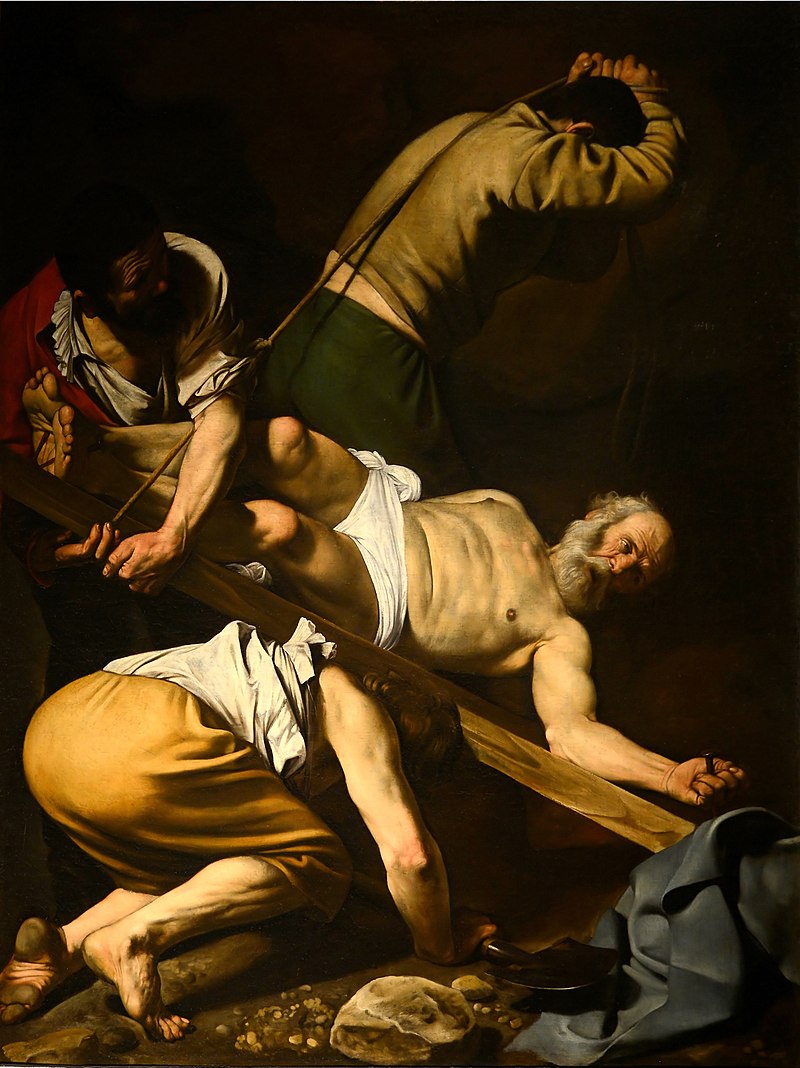
Caravaggio (Baroque painter with a very interesting and intimate painting style)
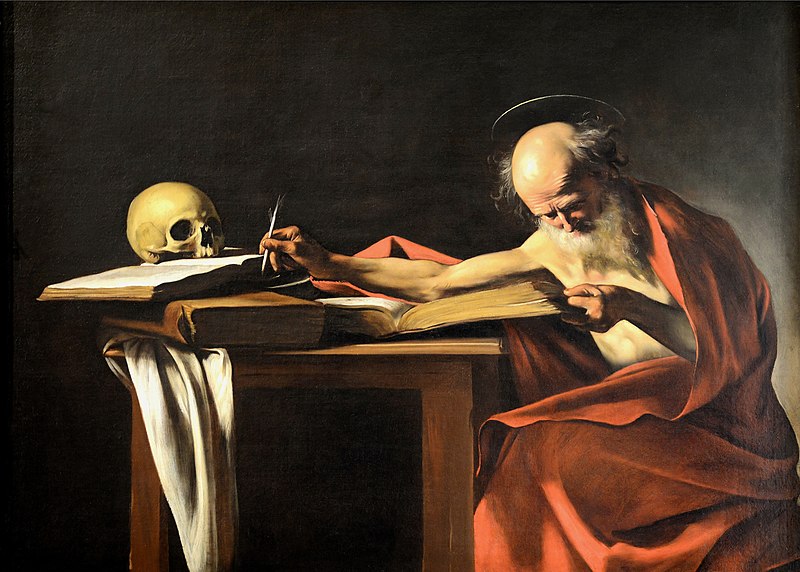
St. Jerome

The Crucifixion of St. Peter
Sculptors:
Michelangelo (High Renaissance sculptor, painter, and architect)
Risultati immagini per michelangelo david
David
Bernini (Baroque sculptor and architect. Check out Apollo and Daphne, David, Apollo and Daphne, The Rape of Proserpina, and Ecstasy of Saint Theresa)
Detail of The Rape of Proserpina. The realism of the fingers on the thigh is incredible.
Bernini's David.jpg
David

Monday, January 29, 2018

Art Week

At the University of Mary we are blessed to have a president with so many connections. One of them is a French woman named Pascaline who studied and worked at the Louvre in Paris. She now teaches the Art of Rome and Paris for the UMary students studying in Rome. She is incredibly smart and clearly loves the class a lot. One of the most impressive things to me was Pascaline's ability to synthesize art, history, and theology, all while making it accessible and interesting to us. She says that her goal is to help us to really see the art; she wants us to know what a piece is, what the goal of it is, when it was made, what it was influenced by, etc. Remarkably, one week later, we were in the early stages of being able to do all these things.

A brief note about how the class works. Because she lives in Paris, Pascaline is not able to teach on a regular schedule. The solution to this is to have three weeks that are completely dedicated to the art class. Our first week of class was one of those weeks. It was absolutely crazy (we were usually doing class related stuff for 7-9 hours a day) and incredibly interesting. I thought going into it that it would be one of the most interesting classes I have taken because I know so little about art, and I was very right. I took more notes in one week for that class than I do in entire semesters for other classes, and every bit of it was fascinating.

The general structure for the class is to trace art historically from Antiquity (Greeks and Romans), to Early Christian/Byzantine, Medieval, Renaissance, Baroque, etc. Each unit receives about a day in the class and a day-and-a-half or two days in the city. In the city, Pascaline shows us ruins, museums, etc. and has us work individually or in groups to work out what an old building looked like or describe a fresco/mosaic/statue. This was incredibly difficult and awkward at first, but became somewhat more natural by the end of the week. Just this past weekend I was in Ravenna, Italy (home to some of the most amazing mosaics in the West), and myself and those I was travelling with were able to read the mosaics pretty well if I do say so myself. We were certainly better at it than we would have been without the class, and that was an awesome feeling.

Some of the sites we visited were the Colosseum, the Roman Forum (center of ancient Roman life), the Palatine Hill (where the palaces of the emperors were located), the Baths of Caracalla, the National Museum of Rome, the Church of Saint Clement, St. Peter's Basilica, and the Vatican Museums.

It was an incredible week and left me with some thoughts about modern art and architecture that I will try to convey soon.

God bless.