For Lent this year, I made a commitment to participate in the Station Mass pilgrimage as often as possible (exceptions being when I was not in Rome and the unanticipated snow day). This pilgrimage was started by St. Phillip Neri after the Reformation as a devotional to early church saints and martyrs. Each day people would go to a different church in Rome for Mass in the morning, eventually visiting about forty of Rome's many churches. The practice died off, but was revived in recent years by the North American College (the college that houses seminarians from North America and Australia). It is a sacrifice of sleep (I got up at about five in the morning everyday that I went to Mass), but it was a beautiful way to see some old churches and celebrate Mass in English.
Many of the churches are basilicas that were built over old house churches (places that Christians gathered before they could legally practice the faith in the Roman Empire). They also often had crypts where older churches, art, and tombs could be seen; many of these crypts are only open to the public on the day of the Station Mass.
One of the great joys of participating in the Station Masses (aside from receiving the body of our Lord and Savior Jesus Christ) was hanging out with our chaplains afterwards. Many Masses were followed by breakfast with the priests and seminarians who served our program (more on them in another post).
It was also a lot of fun getting to know the other people who frequented the Masses. One of the girls in our group--who spoke German--ended up helping a lady from Germany film little videos that she would send back to her followers in that country after every Mass. There were also several priests and seminarians not from our group that we got to know fairly well.
If anyone reading this finds themselves in Rome during Lent, I would highly recommend making the sacrifice of a little sleep to go to the Station Mass for at least one of the days. It is a beautiful, interesting, and awesome experience.
Showing posts with label Rome. Show all posts
Showing posts with label Rome. Show all posts
Monday, May 28, 2018

Monday, May 7, 2018
St. Benedict: The Man, the Monk, the Saint
I figured that--seeing as two of my trips were to Benedictine monasteries, and my school is a Benedictine university--it might be useful to present a brief biography of St. Benedict for those who do not know much about him. Most of the information I have is from St. Gregory's The Life of St. Benedict.
Benedict was born in 480 AD in Nursia, Italy. He had a twin sister named St. Scholastica. In his teen years, he went to study in Rome. He was disgusted by the lifestyles of those in the city and did not see a need to study pagan writers of old (not as old as they are now obviously). When he could take it no more, he fled the city to become a hermit in a cave near Subiaco.
As a hermit, he had a mentor monk who made sure that he had a place of seclusion for prayer, as well as food. However, he became famous for his holiness, working several miracles and overcoming lust by jumping into, and rolling around in, a bunch of thorns. Eventually, he was asked by a community of monks to become their abbot. However, these monks were used to being very relaxed in their disciplines, and St. Benedict would have none of it. The monks grew to dislike him, going so far as to try to poison him. They slipped poison into his wine, but the cup shattered when Benedict blessed it. Benedict then left these unfaithful monks, returning to his cave at Subiaco.
Benedict's reputation only continued to grow, and he eventually attracted people to himself. Benedict and his followers then formed the first Benedictine monastery at Subiaco. However, a priest who lived in the area and was jealous of Benedict tried to poison him (which failed), and then tried to seduce his monks with prostitutes (which also failed). Benedict decided it would be best for him to leave, so he headed to Monte Casino and founded a new monastery. At this time, he founded a total of twelve monasteries, and his reputation for holiness and miracles continued to grow.
Benedict cast out demons, raised people from the dead, read souls, converted barbarians, and was an all around saintly man. He is most famous for the rule of life he wrote for his monks (aptly titled The Rule of St. Benedict). His monks would go on to preserve much of Western thought through the Middle Ages (ironic considering Benedict's view of Western thought), so we have the Benedictines to thank for the preservation of Greek and Roman writings. Benedict died in 543 AD, but his influence and legacy have lived on even to the modern day.
If you want to learn more about St. Benedict, I would highly recommend reading St. Gregory's book about him (it is not that long).
St. Benedict, Pray for us.
Benedict was born in 480 AD in Nursia, Italy. He had a twin sister named St. Scholastica. In his teen years, he went to study in Rome. He was disgusted by the lifestyles of those in the city and did not see a need to study pagan writers of old (not as old as they are now obviously). When he could take it no more, he fled the city to become a hermit in a cave near Subiaco.
As a hermit, he had a mentor monk who made sure that he had a place of seclusion for prayer, as well as food. However, he became famous for his holiness, working several miracles and overcoming lust by jumping into, and rolling around in, a bunch of thorns. Eventually, he was asked by a community of monks to become their abbot. However, these monks were used to being very relaxed in their disciplines, and St. Benedict would have none of it. The monks grew to dislike him, going so far as to try to poison him. They slipped poison into his wine, but the cup shattered when Benedict blessed it. Benedict then left these unfaithful monks, returning to his cave at Subiaco.
Benedict's reputation only continued to grow, and he eventually attracted people to himself. Benedict and his followers then formed the first Benedictine monastery at Subiaco. However, a priest who lived in the area and was jealous of Benedict tried to poison him (which failed), and then tried to seduce his monks with prostitutes (which also failed). Benedict decided it would be best for him to leave, so he headed to Monte Casino and founded a new monastery. At this time, he founded a total of twelve monasteries, and his reputation for holiness and miracles continued to grow.
Benedict cast out demons, raised people from the dead, read souls, converted barbarians, and was an all around saintly man. He is most famous for the rule of life he wrote for his monks (aptly titled The Rule of St. Benedict). His monks would go on to preserve much of Western thought through the Middle Ages (ironic considering Benedict's view of Western thought), so we have the Benedictines to thank for the preservation of Greek and Roman writings. Benedict died in 543 AD, but his influence and legacy have lived on even to the modern day.
If you want to learn more about St. Benedict, I would highly recommend reading St. Gregory's book about him (it is not that long).
St. Benedict, Pray for us.
Monday, April 23, 2018
I Apologize...Again
Well I have managed to fail at this blogging thing. I apologize for all those who were hoping to follow my trip on this blog. It has been very busy here and, in the process of trying to take everything in, I have failed out putting anything out. However, I have a plan (plan C or D at this point) to get things out to people who are still interested and who will not be able to see me right away.
I return from Rome this Sunday and should be home Monday at the latest. I will have about a week off before I begin working. During that week I will write a bunch of posts and release them over the coming days and weeks to give a full(ish) picture of my trip. Topics will include:
-Art Week III (Paris Edition)
-Poland
-Ukraine
-Chernobyl
-Greece
-Venice
-Station Churches
-Community Life
-And more
We will see if anything else gets posted before next week. Thanks in advance for your forgiveness. If there are specific questions or topics you want addressed, leave a comment on this post; I will see what I can do.
God Bless
I return from Rome this Sunday and should be home Monday at the latest. I will have about a week off before I begin working. During that week I will write a bunch of posts and release them over the coming days and weeks to give a full(ish) picture of my trip. Topics will include:
-Art Week III (Paris Edition)
-Poland
-Ukraine
-Chernobyl
-Greece
-Venice
-Station Churches
-Community Life
-And more
We will see if anything else gets posted before next week. Thanks in advance for your forgiveness. If there are specific questions or topics you want addressed, leave a comment on this post; I will see what I can do.
God Bless
Wednesday, February 28, 2018
Art Week II
Well, so much for my good intentions. I must apologize again
for the long delay in writing, especially after promising more in the coming
days after my last post. Although, perhaps you should thank me. I am giving whomever
cares a God-like experience; how often do we apologize for our sinfulness and
promise God that we will do better, only to fall again and again? I will ask
you all to be Christ to me and forgive me each time I fail to deliver; perhaps
one of these times I will deliver.
With that aside, I would like to talk about Art Week II. The
focus of these four days was on the Renaissance and Baroque styles. The art of
these periods is incredible. The details and realism achieved by the sculptors
and painters is unbelievable, and the architects built some absolute marvels.
The interesting thing to me about the art of these periods
is the transition from flat, unrealistic art in the Middle Ages (still beautiful and masterful in its own way) to the highly detailed and realistic art in the Renaissance and Baroque periods. Here is an example of the transition, first in paintings, then in sculpture:
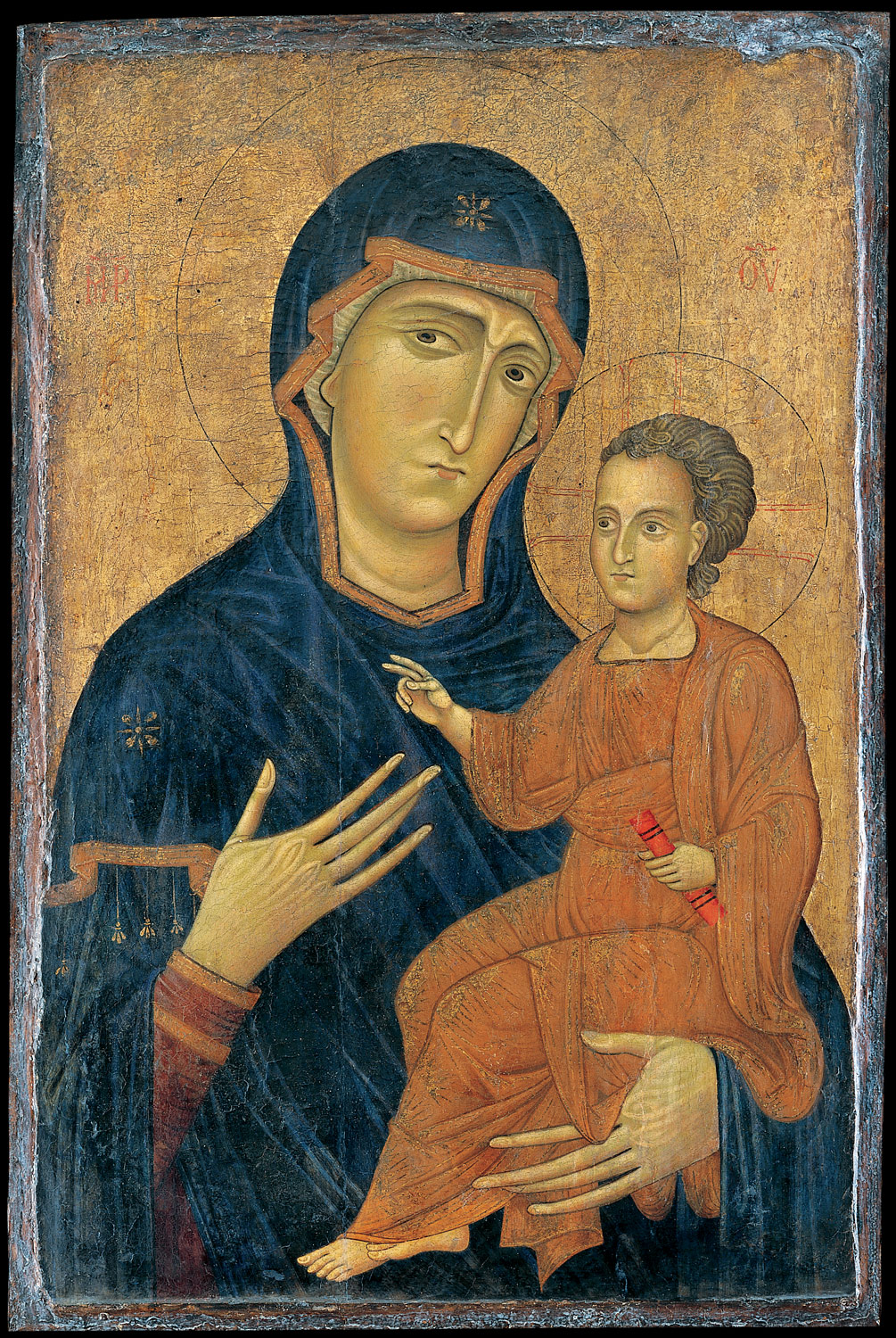 |
| Madonna and Child, Berlinghiero, 13th century Kiss of Judas, Giotto, 14th century  |
 |
| Painting by Fra Angelico, 15th century |
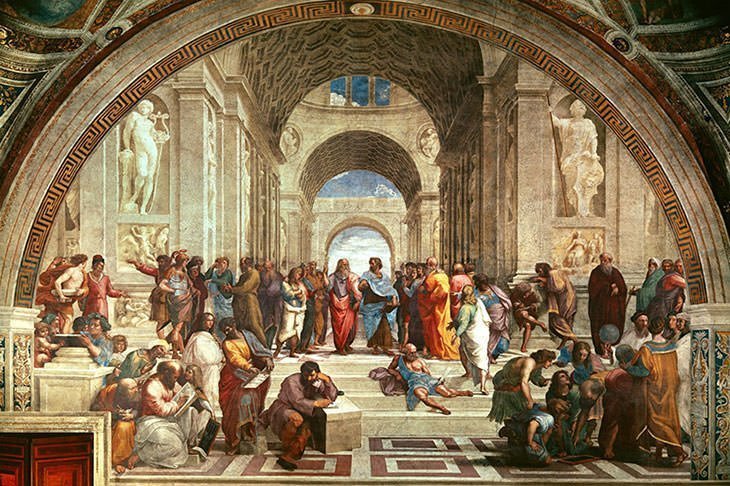 |
| The School of Athens, Raphael, 16th century |
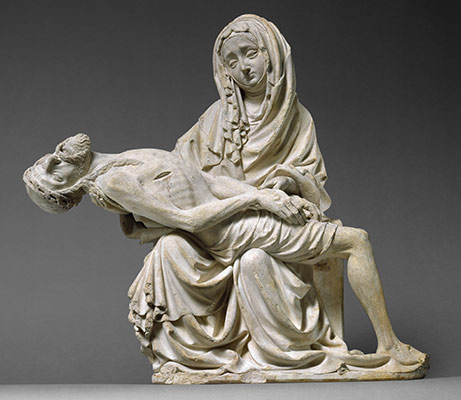 |
| Medieval Pieta |
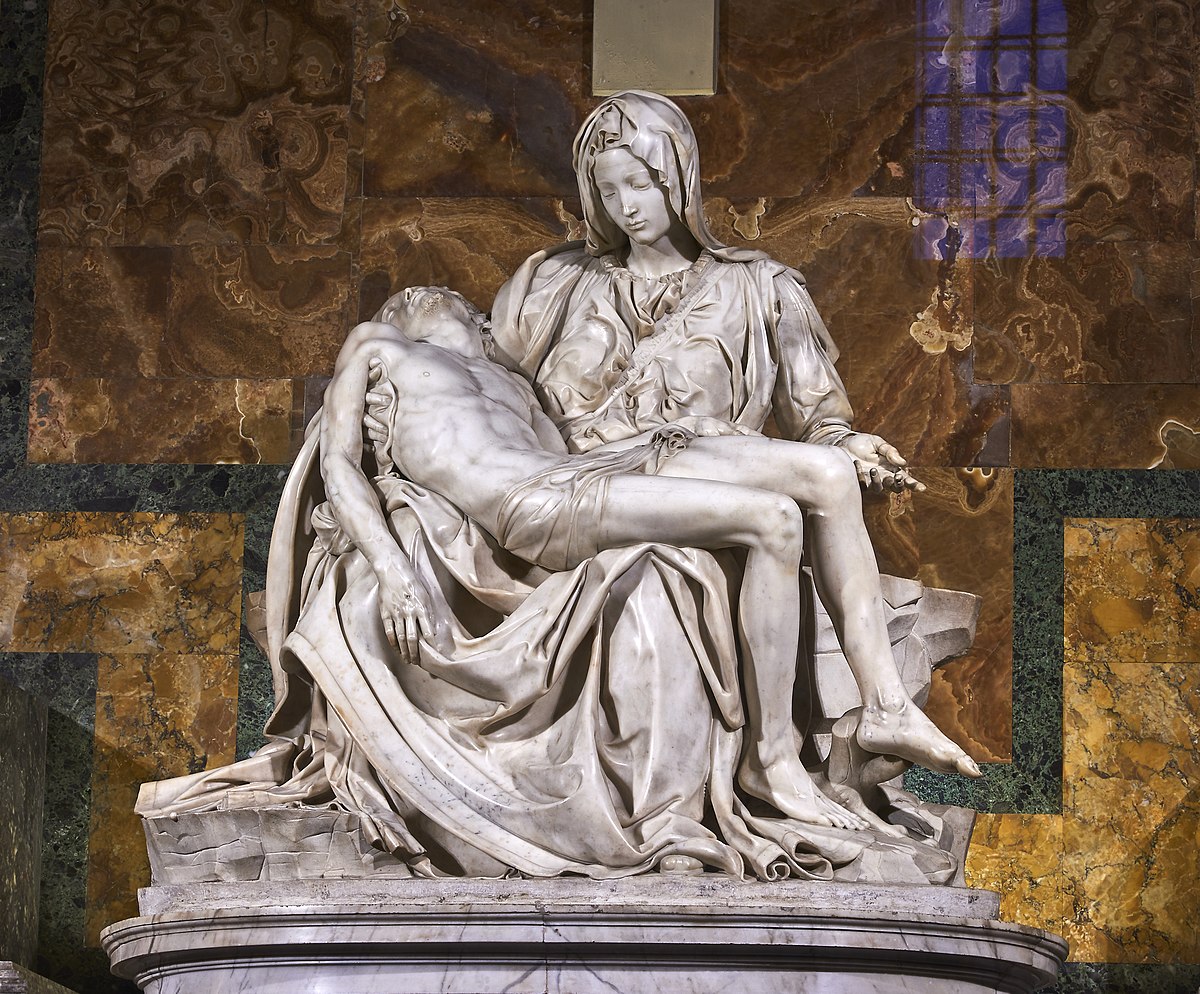 |
| Pieta, Michelangelo, Renaissance |
 |
| The Ecstasy of St. Teresa, Bernini, Baroque Period |
The visits were mostly to museums, churches, and villas
where there are collections of art (the buildings themselves often being a work
of art). I will close with a list a few of my favorite churches, as well as some of my
favorite artists in case anyone is interested in getting a taste of what
I saw.
Churches:
St. Peter's Basilica (Renaissance/Baroque)
The Gesu (Baroque)
The Church of Saint Ignatius of Loyola (Baroque)
Painters:
Fra Angelico (Early Renaissance painter and Beatified Dominican Friar)
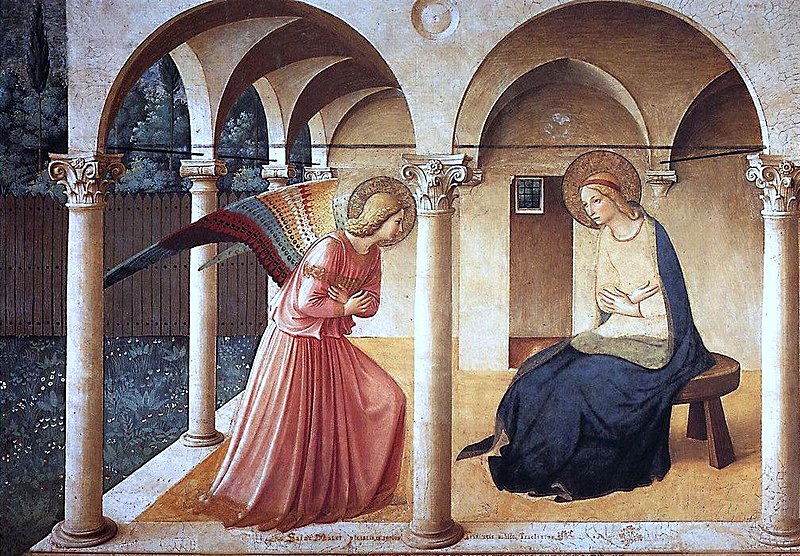 |
| The Virgin of the Annunciation |
Raphael (High Renaissance painter and Ninja Turtle. I especially like his works in the Vatican Museums)
 |
| The Disputation of the Holy Sacrament |
 |
| Madonna of the Meadow |
Caravaggio (Baroque painter with a very interesting and intimate painting style)
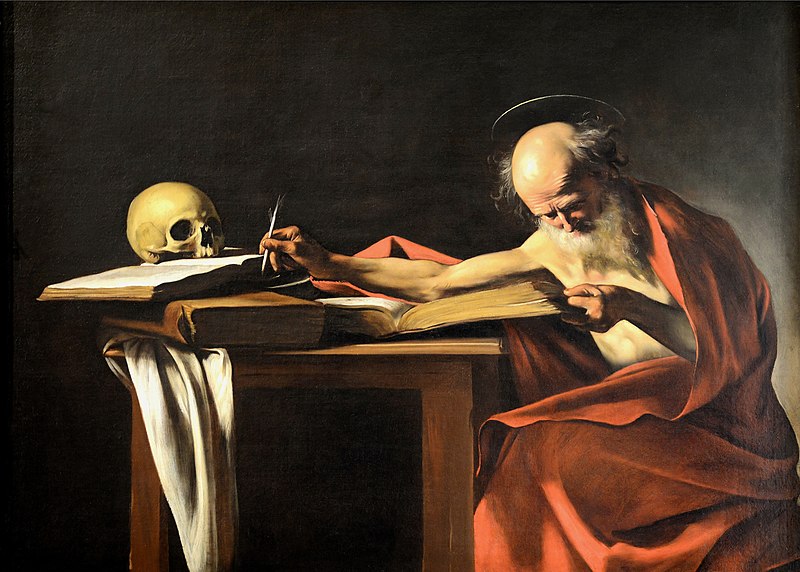 |
| St. Jerome The Crucifixion of St. Peter 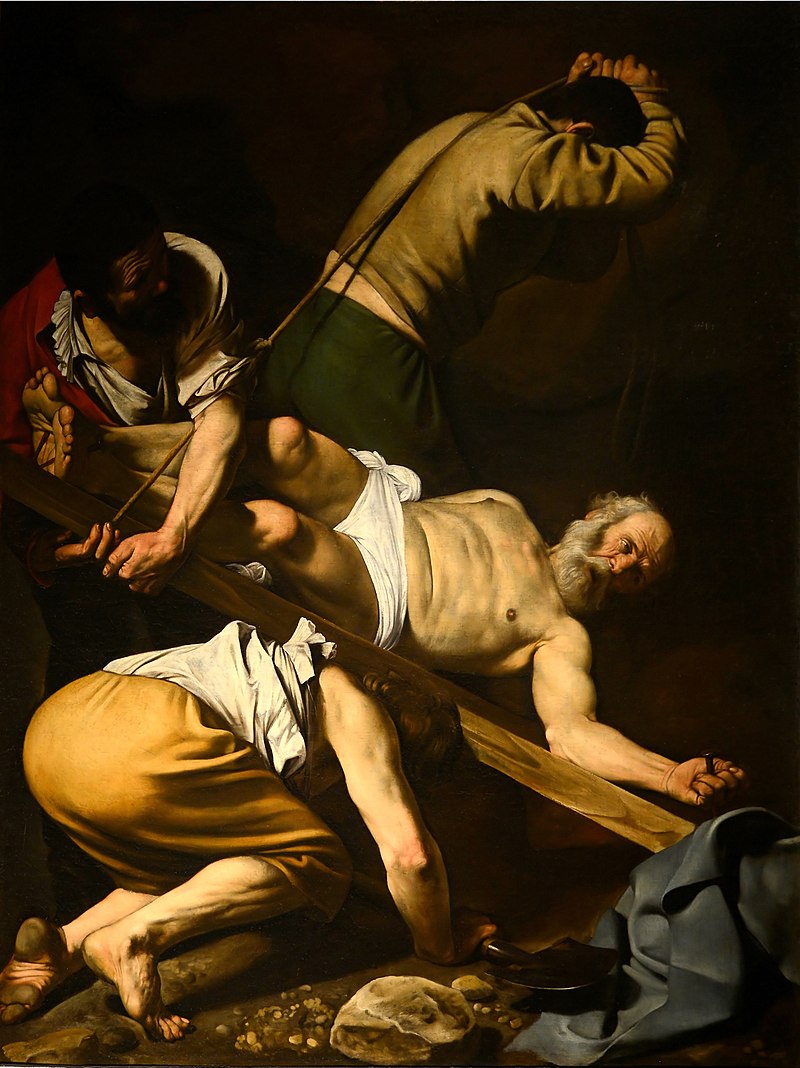 |
Sculptors:
Michelangelo (High Renaissance sculptor, painter, and architect)
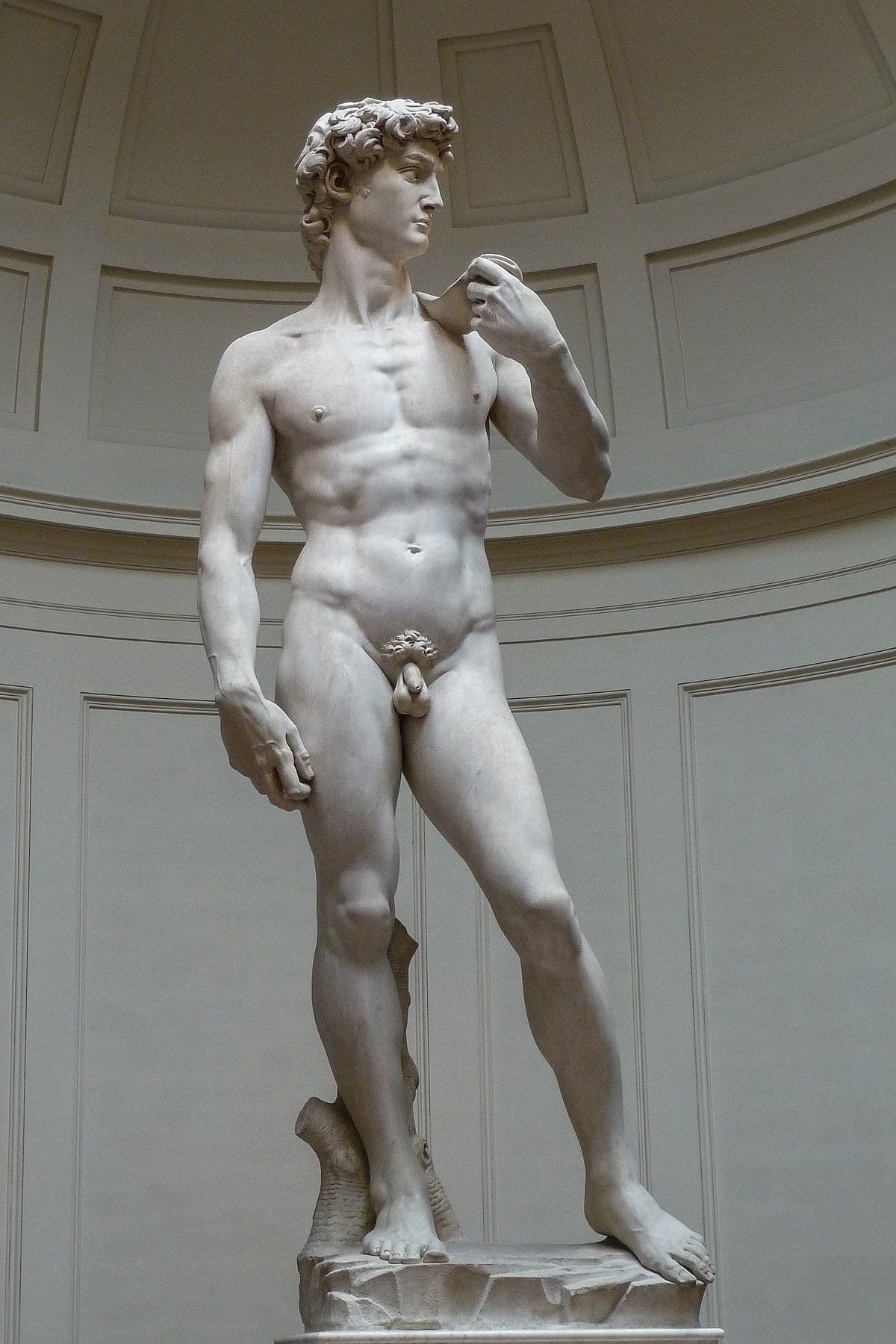 |
| David |
Bernini (Baroque sculptor and architect. Check out Apollo and Daphne, David, Apollo and Daphne, The Rape of Proserpina, and Ecstasy of Saint Theresa)
 |
| Detail of The Rape of Proserpina. The realism of the fingers on the thigh is incredible. |
 |
| David |
Monday, January 29, 2018
Art Week
At the University of Mary we are blessed to have a president with so many connections. One of them is a French woman named Pascaline who studied and worked at the Louvre in Paris. She now teaches the Art of Rome and Paris for the UMary students studying in Rome. She is incredibly smart and clearly loves the class a lot. One of the most impressive things to me was Pascaline's ability to synthesize art, history, and theology, all while making it accessible and interesting to us. She says that her goal is to help us to really see the art; she wants us to know what a piece is, what the goal of it is, when it was made, what it was influenced by, etc. Remarkably, one week later, we were in the early stages of being able to do all these things.
A brief note about how the class works. Because she lives in Paris, Pascaline is not able to teach on a regular schedule. The solution to this is to have three weeks that are completely dedicated to the art class. Our first week of class was one of those weeks. It was absolutely crazy (we were usually doing class related stuff for 7-9 hours a day) and incredibly interesting. I thought going into it that it would be one of the most interesting classes I have taken because I know so little about art, and I was very right. I took more notes in one week for that class than I do in entire semesters for other classes, and every bit of it was fascinating.
The general structure for the class is to trace art historically from Antiquity (Greeks and Romans), to Early Christian/Byzantine, Medieval, Renaissance, Baroque, etc. Each unit receives about a day in the class and a day-and-a-half or two days in the city. In the city, Pascaline shows us ruins, museums, etc. and has us work individually or in groups to work out what an old building looked like or describe a fresco/mosaic/statue. This was incredibly difficult and awkward at first, but became somewhat more natural by the end of the week. Just this past weekend I was in Ravenna, Italy (home to some of the most amazing mosaics in the West), and myself and those I was travelling with were able to read the mosaics pretty well if I do say so myself. We were certainly better at it than we would have been without the class, and that was an awesome feeling.
Some of the sites we visited were the Colosseum, the Roman Forum (center of ancient Roman life), the Palatine Hill (where the palaces of the emperors were located), the Baths of Caracalla, the National Museum of Rome, the Church of Saint Clement, St. Peter's Basilica, and the Vatican Museums.
It was an incredible week and left me with some thoughts about modern art and architecture that I will try to convey soon.
God bless.
A brief note about how the class works. Because she lives in Paris, Pascaline is not able to teach on a regular schedule. The solution to this is to have three weeks that are completely dedicated to the art class. Our first week of class was one of those weeks. It was absolutely crazy (we were usually doing class related stuff for 7-9 hours a day) and incredibly interesting. I thought going into it that it would be one of the most interesting classes I have taken because I know so little about art, and I was very right. I took more notes in one week for that class than I do in entire semesters for other classes, and every bit of it was fascinating.
The general structure for the class is to trace art historically from Antiquity (Greeks and Romans), to Early Christian/Byzantine, Medieval, Renaissance, Baroque, etc. Each unit receives about a day in the class and a day-and-a-half or two days in the city. In the city, Pascaline shows us ruins, museums, etc. and has us work individually or in groups to work out what an old building looked like or describe a fresco/mosaic/statue. This was incredibly difficult and awkward at first, but became somewhat more natural by the end of the week. Just this past weekend I was in Ravenna, Italy (home to some of the most amazing mosaics in the West), and myself and those I was travelling with were able to read the mosaics pretty well if I do say so myself. We were certainly better at it than we would have been without the class, and that was an awesome feeling.
Some of the sites we visited were the Colosseum, the Roman Forum (center of ancient Roman life), the Palatine Hill (where the palaces of the emperors were located), the Baths of Caracalla, the National Museum of Rome, the Church of Saint Clement, St. Peter's Basilica, and the Vatican Museums.
It was an incredible week and left me with some thoughts about modern art and architecture that I will try to convey soon.
God bless.
Sunday, January 28, 2018
Sorry for the Delay
It has been a while since I have posted anything and I apologize for that. It has been a crazy couple of weeks (Art Week which meant nine hour class days, a trip to the town of Orvietto, first week of regular class, a Papal Audience, a weekend trip to Ravenna, and many things going on back home), so the blog has been on the back burner. I meant to begin catching up today, but a very interesting morning made that impossible.
My friend Ethan loves the Ukrainian Rite of the Catholic Church (in short, the Ukrainian Rite is made up of people from the Ukrainian Orthodox Church--a branch of the Russian Orthodox Church--who left the Orthodox Church and realigned themselves with the Pope while keeping their liturgy and most of their traditions). Ethan had gone to a Ukrainian Rite church last weekend and invited me and our friend Maggie (who was raised in the Ruthenian Rite--similar to the Ukrainian Rite) to go with him this weekend. The Divine Liturgy (what they call the Mass) was celebrated at 10am, so we were on the road at 7:45 to make sure we arrived on time. As we approached the church, we saw a lot of police officers our front. Upon asking what was going on, we were told that the Pope was visiting the church at 4pm. We had to go through security as a result, but we made it in just fine. However, the Liturgy had been moved to 11am, so we had a two hour wait. The wait was not silent however; psalms and prayers were chanted starting at 9:30 and took up most of the time until 11. The psalms were in Ukrainian, so we could not participate, but the woman chanting had a wonderful voice. During all this, the church was filling rapidly. The place was packed and there were many people with Ukrainian flags and cameras. When the Liturgy began, we learned what all the people were so excited for; the Major Archbishop of Kiev (the man in charge of the entirety of the Ukrainian Rite--under the Pope of course) was celebrating the Liturgy in preparation to meet with the Pope at the church in the afternoon. I could not see much of what happened during the Liturgy, but I could hear it and smell it which was beautiful. It went until a little after 1pm (and there are no chairs or pews, so we stood from about 7:45 when we left until close to 2 when we got on the bus to campus) and it was very good. All that being said, I had planned on being back earlier and getting homework and blogging done. Instead I had to focus on homework and skip the blog. However, I suppose that delaying the stuff I wanted to blog about for the opportunity to be an American Latin Rite Catholic celebrating the Divine Liturgy with the head of the Ukrainian Rite Church from Kiev is acceptable.
Hopefully I will give more of an update on things tomorrow.
God Bless.
Tuesday, January 16, 2018
A Short Recap and a Plan
It has been a crazy eight days in Rome. We have been learning about Italian culture (language, habits, public transportation, etc.), life in community with a small group of people, expectations (both of us and what we can expect from the program), classes, food, and much more. In the first week I saw the Colosseum, the Roman Forum, the Pantheon, St. Peter's Basilica, a dozen other churches, and the tombs of about twenty Saints. I have learned how to get fresh bread and meat from a market and navigate the buses and trams (at least to a certain extent). I have tried a variety of wine (they charge you for water here, so wine is often about the same price) and pizzas, all of which were good. I have heard Mass in Italian (twice) and I have seen Pope Francis and prayed the Angelus with him (and a bunch of other people). I am sure there are other things, but it has been kind of a whirlwind of information and experiences, so I cannot think of all of them.
From now on I will be doing less of a chronology and summary of everyday events. I cannot imagine that everything in my day is interesting to read about, particularly because there are many parts that are boring for me to write about. Instead, I am going to focus on telling individual stories about experiences I have, subjects we cover in class, or musings about topics that come to mind over the course of the semester.
For my first musing (perhaps more of a brief rant), I will just say that I despise taking pictures (from either end of the camera), and I see little use for them. They cannot do their subject justice, and they usually leave viewers wanting to see the thing for themselves, rather than content with the image. Also (from a more selfish point-of-view), it forces me to stop taking in the present moment, which I believe is far more important and good than a picture. However, out of obedience to my parents and the chance that some unforeseen good may one day come of them (kind of like how Gandalf says that it might be a good thing for Gollum to be left alive, even though there is no foreseeable good that can come of it), I will take and post some pictures. If you want more pictures, go to nicholaswaddell.com. With all that being said, here is a picture of St. Peter's Basilica.

Good night, and God bless.
From now on I will be doing less of a chronology and summary of everyday events. I cannot imagine that everything in my day is interesting to read about, particularly because there are many parts that are boring for me to write about. Instead, I am going to focus on telling individual stories about experiences I have, subjects we cover in class, or musings about topics that come to mind over the course of the semester.
For my first musing (perhaps more of a brief rant), I will just say that I despise taking pictures (from either end of the camera), and I see little use for them. They cannot do their subject justice, and they usually leave viewers wanting to see the thing for themselves, rather than content with the image. Also (from a more selfish point-of-view), it forces me to stop taking in the present moment, which I believe is far more important and good than a picture. However, out of obedience to my parents and the chance that some unforeseen good may one day come of them (kind of like how Gandalf says that it might be a good thing for Gollum to be left alive, even though there is no foreseeable good that can come of it), I will take and post some pictures. If you want more pictures, go to nicholaswaddell.com. With all that being said, here is a picture of St. Peter's Basilica.

Good night, and God bless.
Subscribe to:
Posts (Atom)